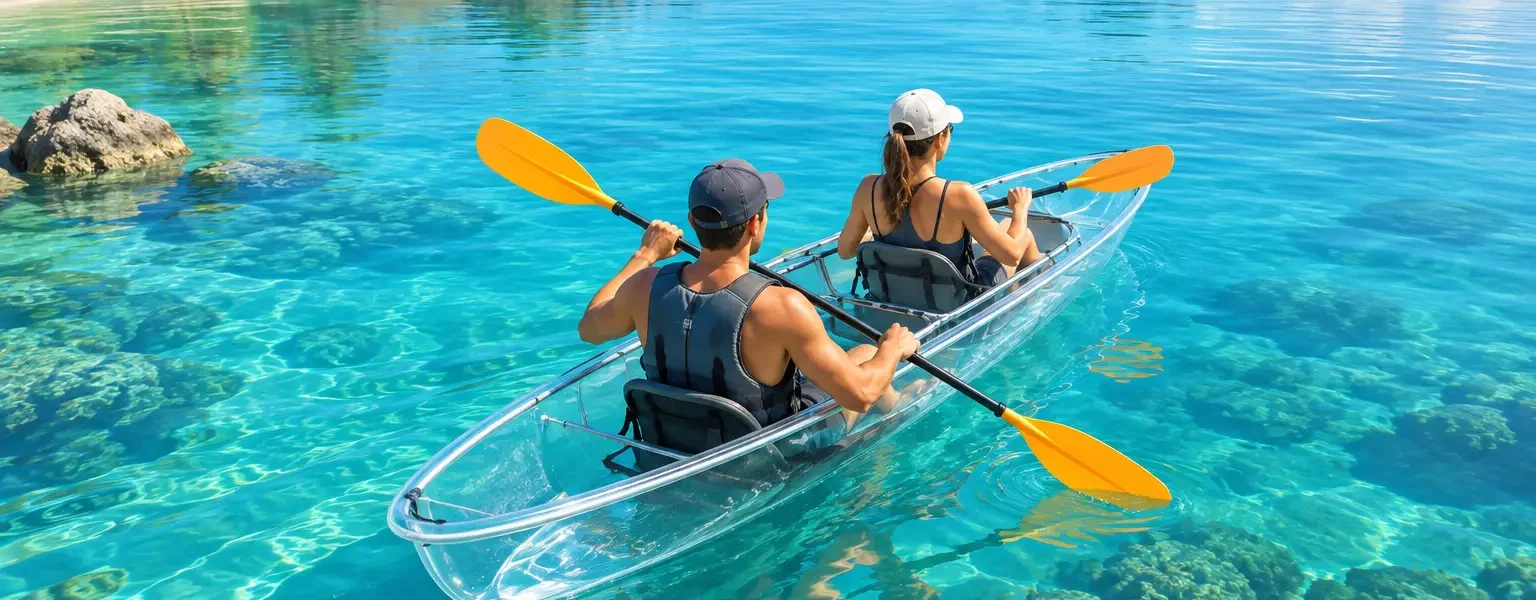
The first surprise when learning how to paddle clear kayaks is that the water below you can be more distracting than the water ahead. In Turks and Caicos, shallow turquoise channels, mangrove edges, and flashes of marine life can make you want to stop every few feet. That is part of the experience. The key is to paddle with relaxed, deliberate strokes so you can enjoy the view while keeping your kayak moving smoothly.
Clear kayaks are designed for sightseeing, not racing. You do not need kayaking experience to enjoy one, but a few simple techniques will help you feel confident from the moment you push off shore. Whether you are joining a guided Mangrove Cay eco-tour, heading toward Iguana Island, or taking photos with your travel crew, these basics make the ride more comfortable and more fun.
Start With a Balanced Seat
Before you take your first stroke, settle into the kayak. Sit with your back comfortably supported, your feet placed evenly, and your weight centered between the sides of the boat. Avoid leaning hard to one side to look through the clear bottom. Transparent kayaks give you a wide view already, so a small shift of your shoulders is usually enough.
If you are paddling tandem, balance matters even more. Sit facing forward and give each other room to move the paddle. The person in the rear often has a little more influence over direction, while the person in front helps set an easy rhythm. You do not have to paddle perfectly in sync, but matching your pace keeps the kayak from zigzagging.
Keep personal items secured and light. A water bottle, phone in a waterproof case, sunscreen, and sunglasses with a retainer are practical choices. Large loose bags can shift around, block foot space, or distract you when the kayak is moving.
How to Paddle Clear Kayaks With an Easy Forward Stroke
The most useful stroke is simple: reach forward, place one paddle blade in the water beside the kayak, and pull it back toward your hip. Lift it out, then repeat on the other side. Think of turning your torso gently rather than using only your arms. This takes less effort and helps you paddle longer without tiring your shoulders.
Hold the paddle with both hands slightly wider than shoulder-width apart. Your hands should feel relaxed, not clenched. If you grip too tightly, your forearms will tire quickly, especially when you are excited and paddling faster than necessary at the start.
A smooth forward stroke has three parts:
- Reach forward without leaning far over the bow.
- Put the full blade in the water close to the kayak.
- Pull back steadily, then remove the blade near your hip.
There is no need to splash or dig deep. Short, quiet strokes are often better in shallow Caribbean water because they give you control without disturbing the peaceful setting around you.
Find Your Rhythm Before You Pick Up Speed
For most first-time paddlers, a calm rhythm works best. Take a few strokes, glide for a moment, and look ahead. This gives you time to notice where your guide is heading, spot shallow areas, and enjoy the clear view beneath you.
If you are traveling with a partner, agree on a comfortable pace instead of competing. Clear kayaking is the kind of activity where slowing down can lead to the best moments: a school of small fish passing below, a heron near the mangroves, or a bright stretch of water that looks unreal in your photos.
Steering Without Overthinking It
A kayak turns when one side moves more than the other. To turn right, take a stronger or wider stroke on the left. To turn left, do the opposite. Make small corrections early instead of waiting until you are pointed far off course.
If you need a sharper turn, use a sweep stroke. Reach your paddle farther forward on the opposite side from the direction you want to turn, then make a wide arc away from the kayak. For example, a wide sweep on the left will help turn the boat right. Keep the motion slow and controlled.
In a tandem kayak, communication is more useful than force. A quick “left stroke” or “easy pace” can prevent both paddlers from making competing corrections. If one person is handling direction from the back, the front paddler can focus on steady, even strokes.
What to Do When You Drift
Drifting is normal, particularly when there is a breeze or a gentle current. Do not panic and start paddling hard. First, look where you want to go. Then use a few controlled strokes on the appropriate side to bring the bow around.
A guided tour makes this easier because your guide can point out the best route and help the group stay together. Follow their instructions around mangrove channels, shallow flats, wildlife areas, and boat traffic. They know where the conditions are most enjoyable and where the scenery is worth taking your time.
Stay Comfortable in Shallow Water
Clear kayaks are made for scenic water, but you should still pay attention to depth and surroundings. Do not drag the kayak over coral, seagrass, or rocks. If your guide asks you to stay within a route, there is a good reason – it protects the ecosystem and helps keep everyone safe.
Keep your paddle blade clear of anything below the surface. In very shallow water, use shorter strokes or pause and glide when possible. You may see beautiful details through the transparent hull, but they are best enjoyed without touching or disturbing them.
The sun can feel stronger on the water than it does on land. Apply reef-conscious sunscreen before launching, wear a hat if it will stay secure, and bring water. A lightweight long-sleeve cover-up can also be a smart choice for guests who burn easily. Comfort is not just about your paddle technique – it is about having enough water, shade protection, and room to enjoy the tour.
Paddle for Photos Without Losing Control
Clear kayaks are naturally photo-ready, especially against bright Caribbean water. Still, the best photos usually happen when the kayak is stable. Stop paddling before reaching for your phone, and let the boat settle. Keep your shoulders centered instead of leaning far over the side for an angle.
For couples and friends in a tandem kayak, one person can paddle lightly while the other takes a photo, then switch. If everyone is trying to pose at once while the boat is drifting, you may miss the shot or bump into another kayak.
Drone photography adds a completely different perspective. From above, the transparent kayak can stand out against the shallow blue water, making the setting just as much a part of the memory as the people in it. If you have a drone photo session planned, listen to the photographer’s directions, keep your paddle flat across your lap when asked, and make gentle adjustments rather than sudden turns.
Dove Clear Kayak Adventure TCI pairs guided nature experiences with photo-worthy scenery, so guests can focus less on figuring out where to go and more on enjoying what is around them.
Respect the Wildlife You Came to See
The beauty of a clear kayak is that it lets you observe the water without entering it. That close view comes with a responsibility to give wildlife space. Do not chase fish, reach toward animals, or paddle directly at birds resting along the shoreline.
Mangrove ecosystems are especially valuable nurseries for marine life. Move quietly through these areas, avoid hitting roots with your paddle, and keep voices low when your guide asks. You are more likely to see natural behavior when the group gives the environment room.
If you spot something special, resist the urge to crowd it. Point it out, pause at a respectful distance, and let others enjoy the moment too. The best eco-tour memories come from observing, not interrupting.
A Few First-Time Mistakes to Skip
New paddlers often make the same small mistakes: gripping the paddle too tightly, leaning too far to one side, paddling too fast at the beginning, or looking down so long that they lose track of the group. None of these are a big deal, and all are easy to correct.
Keep your body centered, your eyes moving between the water and the route ahead, and your strokes light. If you feel tired, slow down. Kayaking is not a test of strength. On a calm day, good technique is mostly about patience, balance, and letting the kayak glide.
When you push away from shore, give yourself permission to take it easy. A clear kayak is your front-row seat to the water below, the mangroves beside you, and the Caribbean horizon ahead. Paddle softly, look often, and leave space for the unexpected moments that make a vacation story worth telling.