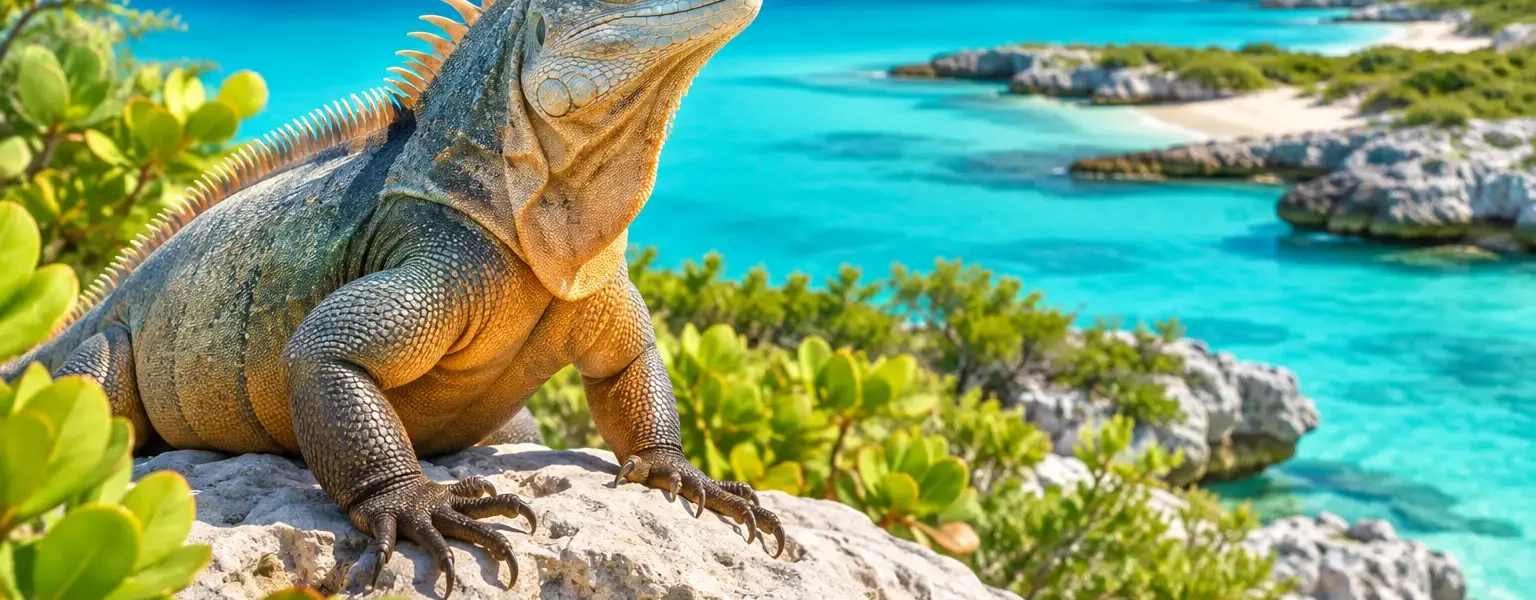
The first time you spot one, it may be completely still – a sun-warmed shape against pale limestone, watching your group with ancient-looking calm. If you are asking where to see island iguanas in Turks and Caicos, Little Water Cay is the place travelers should have on their vacation list. Often called Iguana Island, this small protected cay near Providenciales offers the rare chance to observe the Turks and Caicos rock iguana in its natural island habitat.
This is not a zoo-style encounter, and that is exactly what makes it memorable. Reaching the cay by water turns the wildlife sighting into part of a larger day of shallow-blue channels, mangroves, and open Caribbean scenery.
Where to see island iguanas near Providenciales
Little Water Cay sits just off the northeastern side of Providenciales. It is part of a protected network of small cays and wetlands, with dry coastal vegetation, rocky ground, and sandy edges that provide suitable habitat for the resident iguanas. For visitors staying around Grace Bay, it is a convenient nature escape that feels far removed from resort life.
The animals you are hoping to see are Turks and Caicos rock iguanas, a species found nowhere else on Earth. They are large, sturdy reptiles with textured scales and long tails, and their colors can blend surprisingly well into the island landscape. You might notice an adult stretched across a sunlit rock, moving slowly through low shrubs, or pausing near a trail as your group passes.
There is never a guaranteed wildlife schedule. Iguanas are wild animals, not attractions placed on cue. Still, guided trips to the cay give visitors a strong chance of seeing them while also helping them understand why their protected habitat matters.
Why a water-based tour is the best approach
Little Water Cay is most rewarding when you arrive as part of an eco-focused outing rather than trying to treat it as a quick roadside stop. The journey across the water reveals a different side of Providenciales: bright sandbars, seagrass beds, mangrove edges, and wide views that do not show up from the beach.
A clear kayak adds another layer to the experience. Looking through the hull at shallow water can make even the paddle out feel like sightseeing, especially on calm, sunny days. First-time paddlers do not need to be experts to enjoy this kind of outing, but guided support makes the route, conditions, and wildlife etiquette far easier to navigate.
Dove Clear Kayak Adventure TCI offers an Iguana Island and Mangrove Cay Eco-Tour designed for travelers who want that combination of island wildlife, scenic paddling, and photo-ready Caribbean water. It is a smart fit for couples, families, and friend groups who want more than another beach afternoon.
The best time to spot iguanas on Iguana Island
Morning is often an excellent time for an island iguana visit. The air is generally cooler, the water may be calmer, and the animals may be out warming themselves after the night. Earlier tours can also feel more peaceful before the strongest midday sun arrives.
That said, weather and season shape every outing. On a bright day, iguanas may be easier to spot while basking in open areas. During very hot periods, they can move toward shade and become less obvious. Wind can affect kayaking conditions, too, which is why a guided operator may adjust timing or routes with comfort and safety in mind.
For the most comfortable experience, wear lightweight sun-protective clothing, bring reef-safe sunscreen, and carry drinking water. A hat and sunglasses are especially useful on the water, where reflected sunlight can be intense. Choose secure water shoes or sandals if your itinerary includes time ashore.
Bring a camera, but keep the encounter natural
Iguana Island is built for vacation photos, but the best images come from patience. Stand back, keep your movements slow, and let the iguana decide whether to stay in view. A phone camera with a modest zoom is usually enough. Trying to get too close is not worth stressing an animal or missing the moment by focusing only on the screen.
If you are celebrating a honeymoon, anniversary, family trip, or friends’ getaway, consider planning your photo moments around the wider landscape as well. Clear water, bright sand, mangrove channels, and the distant cays create a setting that feels distinctly Turks and Caicos. Wildlife photos are special, but the photos of your group arriving, paddling, and taking in the view often become the ones you share most.
How to visit responsibly
The Turks and Caicos rock iguana is a protected species, and respectful behavior is essential. A close encounter should never mean physical contact. Do not touch, chase, corner, pick up, or feed an iguana. Human food can harm wildlife and changes natural behavior, even when an animal looks curious or approaches a visitor.
Stay with your guide and use marked pathways where available. Keep bags, snacks, and personal items secured, particularly when you are on shore. Leave shells, plants, and rocks where you find them, and take every piece of trash back with you. Small choices protect a fragile habitat that has taken generations to develop.
Families should prepare children before arriving. Tell them they may get a great look at an iguana, but they need to use quiet voices and give it room. This simple expectation turns the outing into a meaningful wildlife lesson rather than a rushed photo stop.
What else you can see around Little Water Cay
Iguanas are the headline, but they are not the only reason to go. The waters around the cays support seagrass, fish, shorebirds, and mangrove ecosystems that help protect coastlines and provide nursery habitat for marine life. Conditions change from day to day, so no tour can promise a specific species, but keeping your eyes open adds to the fun.
Mangroves are particularly worth noticing. Their roots create sheltered areas for young fish, while the trees provide habitat for birds and help stabilize the shoreline. From a clear kayak, the contrast between tangled roots, glassy water, and bright sky makes the ecosystem easy to appreciate without needing a technical lesson.
This is also why an eco-tour can be a better choice than a fast sightseeing run. Moving at paddle pace gives you time to look down into the water, watch the shoreline, and absorb the quiet parts of the islands that many visitors miss.
Plan your Iguana Island outing
Book early if your Turks and Caicos stay falls during a busy travel period, especially holidays and peak winter weeks. Small-group experiences can fill quickly, and scheduling earlier in your trip gives you more flexibility if weather requires an adjustment.
Before you reserve, consider who is in your group. A guided clear-kayak experience is approachable for casual adventurers, but children, non-swimmers, and anyone with mobility concerns should review the trip details and ask questions before booking. The right tour should feel exciting, not intimidating.
Pack light, protect your phone in a waterproof pouch, and arrive ready to get a little sun and saltwater on you. Most of all, come with realistic expectations: nature does not perform on command. The reward is seeing a rare island species on its own terms, in a place where turquoise water and protected land meet.
When your kayak glides toward Little Water Cay and an iguana appears along the shore, give it space, take in the view, and let the moment be bigger than the photo. Book a guided eco-tour when you are ready to see one of Turks and Caicos’ most distinctive wild residents with the care it deserves.