
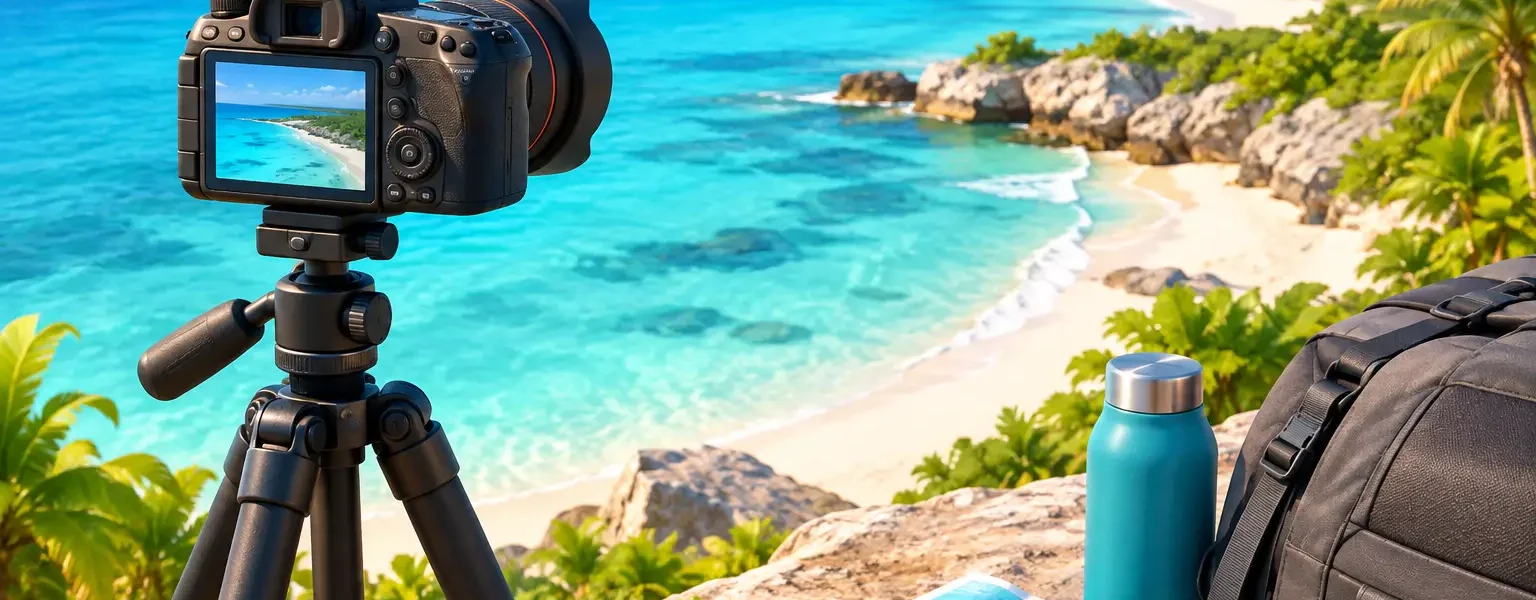
The water at Grace Bay can look almost unreal at midday – pale sand below, bright turquoise stretching to the horizon, and barely a ripple in sight. This Providenciales beach photography guide helps you turn that first wow moment into photos that still feel as vivid when you are home, without spending your whole vacation looking through a screen.
Start With the Light, Not the Location
Providenciales has beautiful beaches all day, but the light changes the story your photos tell. Midday brings the clearest, most electric water color. It is a great time for overhead-style images, wide beach scenes, clear kayak photos, and shots where the ocean is the main subject. The trade-off is stronger shadows, more squinting, and bright highlights on white sand.
For portraits, arrive early or return about an hour before sunset. Morning light is softer, beaches are often quieter, and the sea can be especially calm. Sunset adds warmth to skin tones and gives your photos a relaxed vacation feel, though the turquoise may look less vivid than it does at noon.
Clouds are not a reason to cancel. A thin layer of cloud softens harsh light and can make couples and family portraits much easier. If a brief shower passes through, wait it out if you can. The air often clears quickly, and the sky may add more character than a plain blue backdrop.
Use Midday for Caribbean Color
When the sun is high, point your camera toward shallow water and keep a little sand or shoreline in the frame for contrast. A polarizing filter can reduce glare on the surface, but rotate it carefully. Too much polarization can make sections of a wide sky look uneven.
For phone photos, tap the water on your screen, then lower exposure slightly. This protects bright sand and helps preserve the blue and turquoise tones that make Provo beaches so recognizable.
Use Golden Hour for People
At golden hour, place the sun behind or just to the side of your subject. Hair catches a warm edge of light, and faces look more natural than they do under direct overhead sun. Ask people to walk slowly at the waterline, hold hands, adjust a hat, or look toward the sea instead of posing stiffly for every frame.
The best vacation photos usually show a real moment: a child running toward the water, friends laughing after a wave reaches their feet, or a couple taking in the view together.
Pick a Beach Scene With a Clear Point of View
Grace Bay is famous for a reason, but a strong image needs more than beautiful water. Before taking the photo, decide what the viewer should notice first. It might be a curve of shoreline, a single palm, a clear kayak floating over sand ripples, or your group standing against the open ocean.
Avoid putting the horizon straight through someone’s head or cutting the frame at awkward joints. Keep the horizon level, then place it high in the frame when the sand and water are your focus, or lower when the sky is doing something special.
A wide scene is ideal for showing scale, especially on open beach stretches. Then get closer. Photograph wet footprints, seafoam around ankles, hands skimming the water, colorful swimwear against pale sand, or the texture of a palm shadow. Those smaller images make a vacation gallery feel personal instead of repetitive.
Providenciales Beach Photography Guide for Natural Portraits
You do not need to pose like a professional model to look good on the beach. The easiest approach is movement. Walk parallel to the shore, turn toward each other, carry sandals, let kids play, or pause to look out over the water. Give the camera something real to capture.
Wear colors that work with the setting rather than compete with it. White, linen, soft coral, sunny yellow, light blue, and tropical prints all photograph beautifully against the sea. Very dark clothes can absorb detail in strong sunlight, while neon colors may reflect onto skin. If your group is coordinating, choose a loose palette instead of matching outfits exactly.
Wind is part of the beach. It can add motion to dresses, cover-ups, and hair, but it can also make everyone feel rushed. Bring a hair tie, a light layer, and a towel to dry feet between locations. Small preparations keep the session relaxed.
For couples, create variety by alternating between wide scenic photos and closer frames. Stand together facing the ocean for one shot, then turn in toward each other. The wide image says where you were. The close image preserves how the trip felt.
Photograph the Water From a New Angle
Shallow-water photography is one of the best reasons to bring a waterproof phone pouch or action camera to Providenciales. The water is often clear enough to reveal sand patterns, rays of sunlight, and movement beneath the surface. Keep your lens clean and dry it often – a single saltwater spot can soften an otherwise perfect image.
A transparent kayak creates a particularly striking perspective because it places you over the water rather than simply beside it. Keep the composition simple: a paddler, the kayak outline, and visible sand or seagrass below. Calm conditions make a major difference, so morning is often the better choice for clean reflections and crisp detail.
Dove Clear Kayak Adventure TCI also offers drone photoshoots for couples, solo travelers, and families who want that elevated turquoise-water view without assigning someone in the group to stay behind the camera. If you book any aerial session, wear a color that stands apart from the sand and avoid bringing too many loose items into the frame.
Get Better Photos With Your Phone
Your phone is more capable than most vacationers realize, especially in bright Caribbean conditions. Clean the lens before every new location. Sunscreen, sea spray, and fingerprints are the fastest way to make clear water look hazy.
Use the standard camera lens for people when possible. Ultra-wide lenses are great for big landscapes, but they can stretch faces and bodies near the edges of the frame. Step back instead of relying on digital zoom, and take several versions of the same scene. The best expression often happens just after the planned photo.
Turn on gridlines to help level the horizon. If the sun is behind your subject, tap their face to expose for it, then adjust slightly downward so the sky does not turn completely white. Portrait mode can work well near sunset, but check the edges around hair, hats, and moving hands before you decide it is the keeper.
Respect the Beach While You Create
The places that make Providenciales so photogenic deserve a little care. Stay off dunes and planted vegetation, do not move shells or marine life to build a scene, and give birds, iguanas, and other wildlife plenty of distance. A long lens or a tighter phone crop is always better than approaching an animal for a close-up.
If you plan to use a drone independently, check current local permissions and restrictions before flying. Conditions can change, and beaches may sit near sensitive wildlife areas, private resorts, or airspace where flights are restricted. Never fly over people who have not agreed to be in your shot.
Leave the beach better than you found it. Pack away drink cups, hair ties, snack wrappers, and props. The clean, open shoreline in your photo is part of what makes the experience special for the next visitor, too.
Build a Photo Plan That Leaves Room for the Trip
A little planning prevents the familiar vacation problem of having hundreds of photos but few you actually want to share. Choose one morning for calm-water scenes, one golden-hour walk for portraits, and one activity where everyone can be present while photos happen naturally. That is enough to create range without turning every beach stop into a production.
Save a few images without people in them, then hand the phone to someone else for a frame where you are part of the memory. The turquoise water will be there in the background, but years from now, the photo you value most may be the one that captures your bare feet in the sand and the people who came with you.