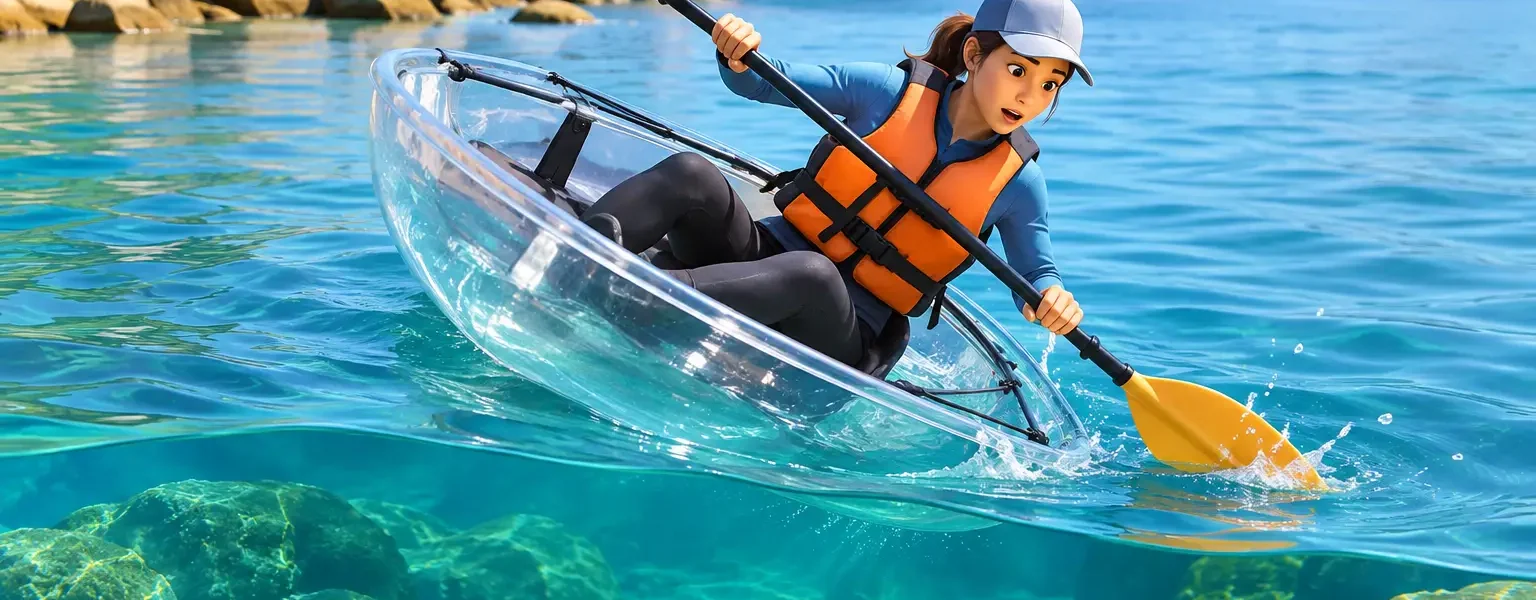
A clear kayak lets you watch the water moving beneath your seat, spot flashes of fish over seagrass, and see the sandy shallows from a completely different angle. That view can also raise one very practical question: can clear kayak tipping happen easily? For most guests on a calm, guided Turks and Caicos eco-tour, a clear kayak is a stable and approachable way to get on the water, even if it is your first time paddling.
The honest answer is that any kayak can tip under the wrong conditions. But transparent kayaks are not automatically less stable because you can see through them. A good tour setup, calm route, proper seating, and a few simple habits make a major difference. Here is what to know before you head toward Mangrove Cay or Iguana Island.
What causes clear kayak tipping?
Most clear kayaks used for sightseeing are designed with recreational paddlers in mind. They typically have a wide, open sit-on-top shape that feels steady on flat water. Their transparent hull is made for visibility, but stability comes from the kayak’s width, hull design, weight distribution, and the conditions on the water.
Tipping is more likely when a guest leans far over one side to reach the water, tries to stand up, makes sudden movements, or climbs in and out without guidance. Choppy water, boat wakes, strong wind, and uneven loading can also make any kayak feel less predictable.
This is why a guided eco-tour is a smart choice for vacation paddlers. Guides select routes and launch points with the day’s conditions in mind, help guests get settled, and set a comfortable pace. In shallow, protected areas, you can focus less on balancing and more on the landscape around you.
How stable is a clear kayak on calm Caribbean water?
On calm, shallow water, most guests find a clear kayak surprisingly steady. The first few minutes can feel unusual because you are looking directly down through the hull instead of at a solid-colored boat. Once you settle into the seat and start paddling with an easy rhythm, that feeling usually fades quickly.
The key is to stay centered. Keep your hips and shoulders facing forward, let the kayak move naturally under you, and avoid treating it like a platform for dramatic poses. A little movement is normal. It does not mean the boat is about to roll over.
Weight limits matter, too. Every kayak has a recommended capacity, and tour operators use that information when matching guests, gear, and seating arrangements. Couples and families should be upfront about who will be paddling and whether anyone needs extra support getting in or out of the kayak. That allows the team to organize the safest, most comfortable setup before launch.
The habits that keep your ride steady
You do not need kayaking experience to enjoy a clear kayak tour. You do need to follow a few basics that protect both you and the person paddling with you.
Keep your body low and centered in the seat. If you want to look at something in the water, turn your head and shoulders gently instead of leaning your whole body over the side. Take photos from a seated position, and secure your phone or camera before you launch. The clearest view is no help if your device ends up in the sea.
Paddle with smooth, relaxed strokes rather than quick, hard movements. Your guide will show you how to hold the paddle and steer, but there is no need to race. On an eco-tour, the best moments often happen when you slow down enough to notice the mangrove roots, schools of juvenile fish, and changing shades of blue beneath the hull.
Give other kayaks room. Crossing paddles, grabbing another kayak, or drifting too close can create avoidable wobble. If you need help, call to your guide instead of reaching for a neighboring boat.
Finally, wear your personal flotation device as instructed. It is part of a responsible water experience, not a sign that something will go wrong. Even confident swimmers should wear one, especially in changing coastal conditions.
Getting in and out is when balance matters most
For many first-time guests, launching and returning to shore are the moments that feel most awkward. That is normal. A kayak is most likely to wobble when one person is stepping in while the other person is already seated, or when someone tries to rise too quickly at the end of the tour.
Listen closely to your guide’s instructions at the launch point. Usually, you will step in one foot at a time, lower yourself into the seat, and keep a hand where the guide directs you for support. Move slowly and avoid putting all your weight on one side of the kayak.
When it is time to exit, wait until the kayak is properly positioned in shallow water. Keep your center of gravity low, use the support offered, and step out rather than springing up. This small bit of patience makes a big difference.
What to wear and bring for a more comfortable paddle
The right gear will not change the kayak’s balance, but it can make you feel far more relaxed. Wear swimwear or light, quick-drying clothes you can move in comfortably. Water shoes or secure sandals are helpful for walking at the launch area, particularly where the shoreline is uneven.
Bring sun protection, drinking water, and a towel for afterward. If you plan to bring a phone, use a waterproof pouch with a secure lanyard. Sunglasses with a strap are another smart choice. Caribbean sunshine is part of the experience, but glare off the water can be stronger than expected.
Skip bulky bags, loose hats, and anything you would be upset to lose in the water. A clean, uncluttered kayak gives you more room to sit properly and enjoy the view through the bottom.
Can beginners take a clear kayak tour?
Yes. Clear kayak tours are often a great match for beginners because the pace is recreational, the goals are scenic, and guides are there to help. You do not need to arrive with perfect paddle technique or outdoor-sports confidence. You simply need to be willing to follow safety directions and communicate if you are nervous, have a mobility concern, or need a little extra time.
That said, the best tour for you depends on the day. Weather and water conditions can affect whether a particular route is suitable. A responsible operator may adjust the plan, change timing, or advise against launching if conditions are not right. That is good judgment, not a missed adventure.
For travelers who want a scenic, guided introduction, Dove Clear Kayak Adventure TCI creates an easygoing way to experience Providenciales beyond the beach. The transparent hull adds a special perspective to the mangroves and shallow-water ecosystems, while the guided format helps first-time paddlers feel looked after.
If a kayak does tip, what should you do?
Although it is uncommon on calm guided outings, staying calm is the first rule if a kayak capsizes. Hold onto the kayak if you can, keep your flotation device on, and get your guide’s attention. Do not try to stand suddenly in deeper water or swim away from the boat to retrieve a floating item.
Your guide will direct the next steps based on the depth, current, and conditions. In many shallow-water settings, assistance is close by and the situation can be handled without panic. Leave the recovery process to the people trained to manage it.
The bigger lesson is simple: a clear kayak is designed to be enjoyed from a relaxed, seated position. Treat it as a floating window into the islands, not a diving board or photo prop that needs a risky pose.
A little healthy caution can make your experience better. Ask questions before launch, settle into the kayak at your own pace, and let the quiet water do the rest. Soon, the thought of tipping will likely be replaced by the view below you: sunlit sand, mangrove shadows, and the kind of Caribbean color that stays with you long after the paddle ends.