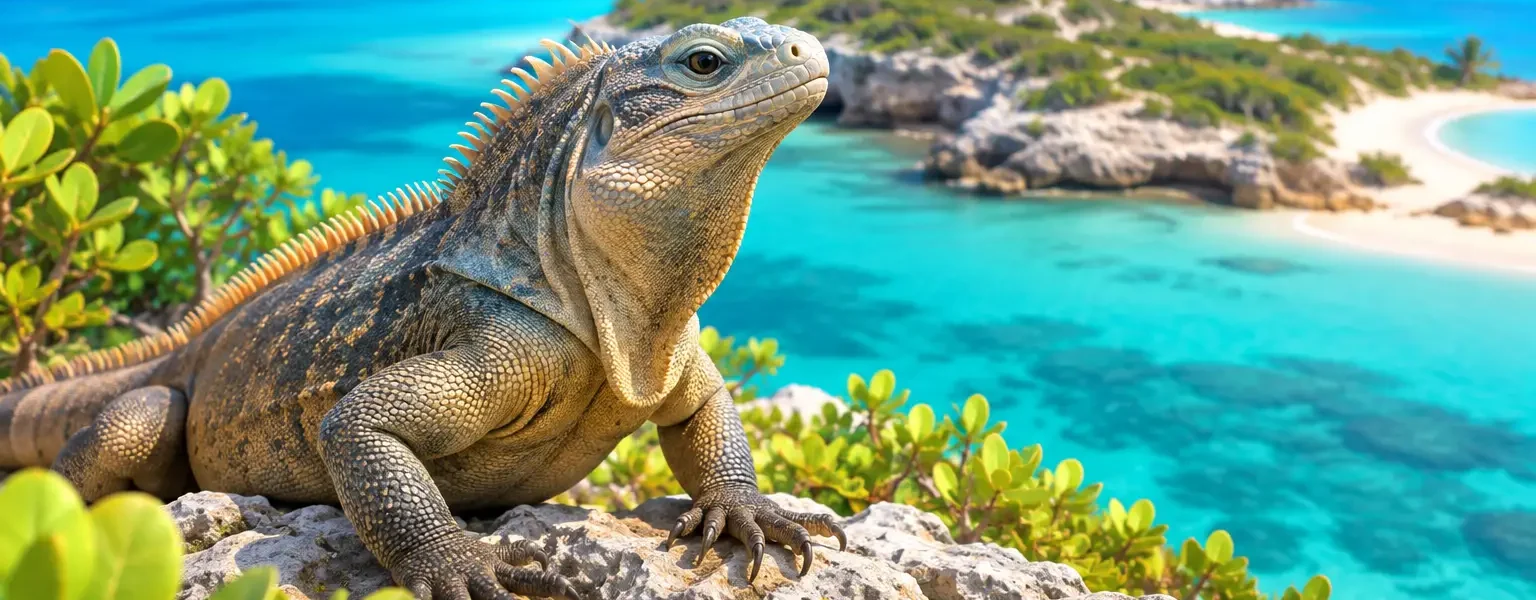
A great island iguana viewing guide starts with one simple rule: the best encounter is one that lets the iguana keep doing exactly what it was doing before you arrived. In Turks and Caicos, spotting these distinctive island residents is a memorable part of an eco-tour, especially when the day also includes shallow water, mangrove scenery, and a transparent kayak beneath you.
Iguanas can look wonderfully relaxed in the Caribbean sun, but they are still wild animals. Give them space, move slowly, and let your guide help you choose the right viewing position. You will come away with better photos, a more natural experience, and the satisfaction of treating the islands’ wildlife with care.
Where island iguana sightings fit into your day
An Iguana Island and Mangrove Cay outing is more than a wildlife stop. It is a chance to see how the landscape works together: clear shallows, seagrass, mangroves, shoreline birds, small fish, and dry island habitat all within the same coastal environment. The transparent kayak adds another layer to the experience because there is often something to see below your paddle as well as ahead of it.
For many visitors, this is a welcome change from a beach-only day. You can still enjoy the Caribbean color and warm water, but with a destination and purpose built into the adventure. Couples get a memorable shared activity, families have an easy way to introduce kids to coastal nature, and friend groups get the kind of setting that looks as good in photos as it feels in person.
Wildlife sightings are never a promise. Weather, tide, temperature, recent activity on shore, and the animals’ own behavior all affect what you see. That unpredictability is part of what makes a genuine wildlife encounter special. A guided eco-tour can improve your chances by taking you to appropriate habitat and helping you understand what to look for, without turning the experience into a chase.
Best time to look for iguanas
Iguanas are ectothermic, meaning they rely on their surroundings to regulate body temperature. On a bright Caribbean day, you may see them warming themselves in open, sunny areas. Early morning and later afternoon can be particularly comfortable times to watch for wildlife, though conditions vary by season and location.
The middle of a hot day can still bring sightings, but animals may shift into shade or become less visible. If the sun is intense, look carefully along the edges of vegetation, low brush, rocks, and quiet shoreline areas. Your guide can point out likely spots while also keeping the group moving at a pace that respects the habitat.
Bring sun protection, drinking water, and a hat with a secure fit. The same sunny conditions that make island colors pop in your photos can feel strong on the water. Lightweight clothing that dries quickly is usually more comfortable than heavy layers, and water shoes can be useful when a tour includes shoreline time.
How to approach without disturbing wildlife
The most photogenic iguana is usually the one that does not feel pressured. Stay on the route your guide recommends and avoid surrounding an animal with your group. When several people close in from different directions, an iguana may retreat, and everyone loses the opportunity to observe its natural behavior.
Keep a respectful distance and use your camera zoom rather than stepping closer. If an iguana changes direction repeatedly, freezes in a tense posture, runs away, opens its mouth defensively, or appears unusually alert to your presence, you are too close. Step back calmly and give it room.
Never touch, feed, or attempt to hold an iguana. Feeding wildlife can change normal habits and encourage animals to approach people for the wrong reasons. It can also expose them to foods that are not appropriate for their diet. The goal is not to make the wildlife friendlier. The goal is to see it behaving naturally in the place it belongs.
Parents should keep children close and explain the rules before approaching shore. Kids often become excellent wildlife observers when they are given a mission: spot movement in the brush, listen for birds, notice tracks, or count how many different colors they can see in the habitat. Quiet curiosity works better than rushing toward the first animal someone spots.
Island iguana viewing guide: what to photograph
A good iguana photo does not need to be taken from inches away. Use the environment to tell the story. Frame the animal with native vegetation, textured shoreline, or Caribbean water in the background. A wider composition can show why the encounter feels so connected to Turks and Caicos, while a zoomed image can capture the details of scales, claws, and watchful eyes.
Avoid using a flash around wildlife. Natural light is better for the setting and less disruptive for the animal. If your phone camera has portrait mode, test it carefully from a respectful distance, but do not rely on it so heavily that you miss the moment. A quick series of photos is often more useful than trying to pose the shot.
For clear kayak photos, think beyond the animal itself. Capture the paddle, the visible kayak floor, the water patterns, and the distant shoreline. Those details make your vacation photos feel like an actual experience rather than a close-up that could have been taken anywhere.
If you are celebrating a honeymoon, anniversary, family trip, or friends’ getaway, professional drone photography can create a different perspective of the day. The wide aerial view is ideal for showing clear water, winding mangrove edges, and the shape of your group on the water. Just remember that wildlife always comes first. Photography should be planned around the habitat, not allowed to interrupt it.
What else you may see near Iguana Island and Mangrove Cay
The wildlife experience is often broader than the name of the destination suggests. Mangrove systems are productive coastal nurseries, and their roots create shelter for young marine life. In clear, shallow water, you may notice fish moving beneath the kayak, rays gliding across sandy patches, or small creatures tucked near seagrass and mangrove edges.
Bird activity can also be part of the show. Keep your eyes up as well as down. Shorebirds and other coastal species may use the same quiet areas that make the tour feel removed from the busier parts of Providenciales.
This is why slower travel matters on an eco-tour. If you paddle hard from one photo stop to the next, you may miss the subtle moments: a fish flashing under the kayak, a bird lifting from the mangroves, or an iguana emerging after the group has paused quietly for a minute. The best sightings often happen when you stop trying to force them.
Make the most of a guided eco-tour
First-time paddlers do not need to be experts to enjoy a clear kayak experience. A guided outing keeps the day approachable by providing direction, local context, and help with the rhythm of the route. Listen during the safety briefing, ask questions when you have them, and let the group know if you need a little extra time getting comfortable on the water.
Choose an experience that fits your group rather than packing your schedule too tightly. A morning tour can leave your afternoon open for the beach or lunch in Grace Bay. A later tour may suit travelers who prefer a relaxed start to the day. If photos are a priority, wear colors that stand out against turquoise water without bringing loose accessories that can blow away or fall into the sea.
Dove Clear Kayak Adventure TCI offers an Iguana Island and Mangrove Cay Eco-Tour designed for travelers who want a scenic, guided way to experience these habitats. Book your preferred time early, especially when traveling during popular vacation periods, and arrive ready to trade a few hours of beach lounging for a closer look at the wild side of Turks and Caicos.
Bring patience with your sunscreen, your camera, and your sense of adventure. An iguana sighting is not just a box to check. It is a small invitation to slow down, look carefully, and remember that the Caribbean’s most lasting vacation moments are often the ones that happen quietly.