The water changes before you even push off. Grace Bay may be known for bright open ocean, but Providenciales lagoons offer a quieter side of Turks and Caicos: shallow channels, mangrove edges, soft ripples, and the kind of scenery that makes a clear kayak feel made for the moment. This Providenciales lagoon paddling guide helps you plan a relaxed, nature-focused outing that fits easily into a beach vacation.
Why Paddle a Lagoon in Providenciales?
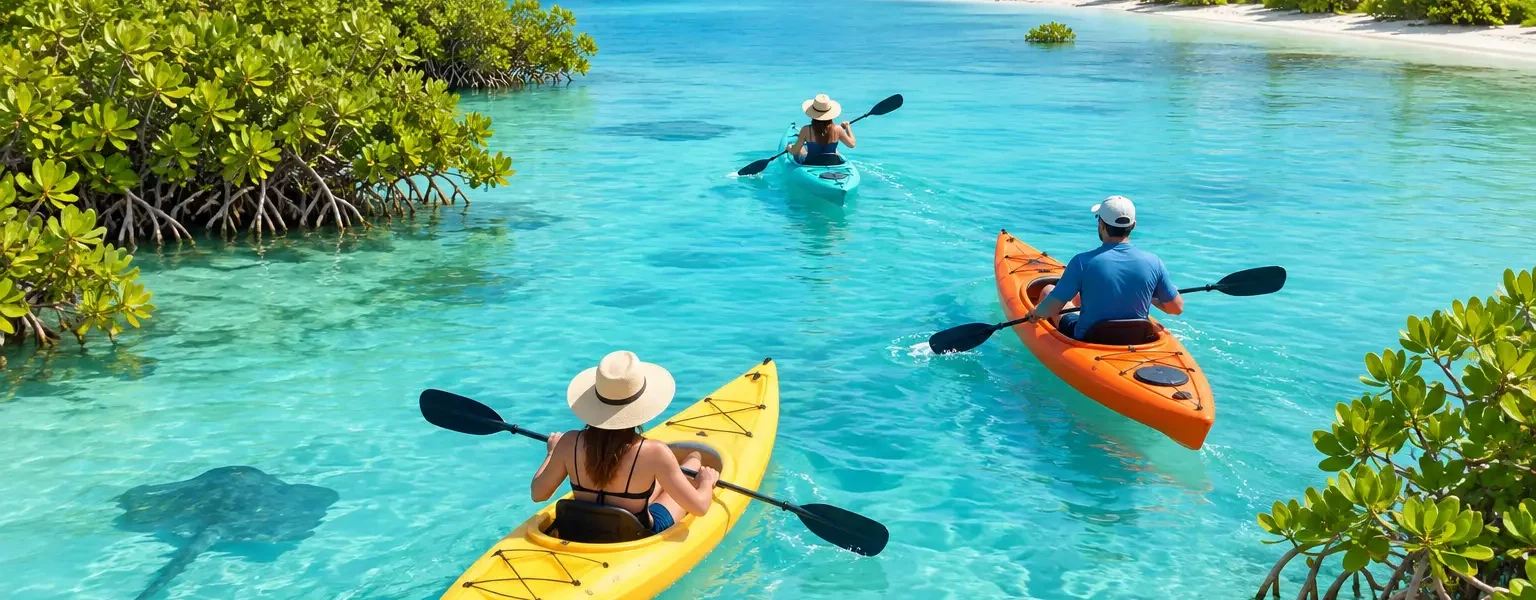
Lagoon paddling is less about covering miles and more about slowing down enough to see what is happening around and beneath you. In calm, shallow water, a transparent kayak turns the ride into part sightseeing cruise, part eco-tour. You can look down through the hull while scanning the shoreline for birds, juvenile fish, and movement near mangrove roots.
For couples, it is a peaceful break from a full itinerary. For families, it is an approachable way to introduce kids to the island’s coastal ecosystems without needing advanced water-sports experience. For friend groups, it is a photo-ready activity that feels distinctly Turks and Caicos, not something you could recreate at any beach back home.
The trade-off is that lagoon paddling has a different energy than paddling over reefs or along exposed coastlines. You are not chasing waves or speed. Conditions, wildlife sightings, and routes can vary with tides, weather, and the day’s water level. That is exactly why the experience feels personal every time.
The Best Time to Get on the Water
Morning is often the sweet spot for a lagoon outing. The air is usually cooler, the water can be calmer, and the light has a clean, soft quality that works beautifully for photos. Early departures also leave plenty of time for beach plans, lunch, or an afternoon around Grace Bay.
Late afternoon can be equally appealing if you want warmer color and a more relaxed end-of-day pace. The sun sits lower, mangrove channels take on richer tones, and the water may look especially striking from a clear kayak. If photography is a priority, ask about timing before you book, since bright midday sun can be great for seeing through the water but can create stronger glare in photos.
Wind matters more than many first-time paddlers expect. A sunny forecast does not automatically mean easy conditions. Light wind can create a comfortable paddle, while stronger gusts can make even a short lagoon route feel more demanding. Guided tours are a smart choice because local guides assess conditions and select an outing that makes sense for the group.
Tides Shape the Experience
In shallow areas, tides influence how much water sits over seagrass, sandbars, and channels. At some times, you may glide easily through a narrow mangrove passage. At others, the route may need to change. Flexibility is part of paddling in a living coastal environment.
Rather than planning around one exact route, plan around the kind of experience you want: calm water, nature viewing, clear-kayak photos, or a stop near destinations such as Mangrove Cay or Iguana Island. A knowledgeable guide can match that goal to the day’s conditions.
What You May See Along the Mangroves
Mangroves are more than a scenic backdrop. Their tangled root systems create shelter for small marine life and help protect the coastline. As you paddle near them, take a moment to look closely at the waterline. You may spot tiny fish moving through the shallows, crabs along the roots, and wading birds watching from above.
Wildlife is never a guarantee, and that is part of responsible eco-tourism. The goal is not to chase animals or crowd them for a photo. Stay quiet, keep a respectful distance, and let the moment come to you. The best sightings often happen when paddlers stop talking for a minute and simply drift.
Iguanas can also be a memorable part of a Turks and Caicos eco-tour, particularly around appropriate island habitats. If you visit an area where they are present, admire them from a distance. Do not feed, touch, or attempt to pose them for pictures. A wildlife encounter is better when the animal gets to carry on as if you were never there.
How to Prepare for Your Paddle
You do not need to be an athlete or an experienced kayaker to enjoy a guided lagoon excursion. Most vacation paddlers do well with a comfortable pace, simple instruction, and a guide who can help everyone settle into the rhythm. The key is to arrive ready for sun, water, and a little outdoor movement.
Wear swimwear or lightweight clothing you do not mind getting splashed. A rash guard or light cover-up is useful when the sun is strong, while water-friendly sandals can make getting in and out of the kayak easier. Sunscreen is essential, but choose a reef-conscious option when possible and apply it before heading out.
Bring water, sunglasses with a secure strap, and a hat that will stay put in the breeze. If you are bringing a phone, use a waterproof pouch even when the water looks calm. Clear kayaks are incredibly photogenic, but your best pictures come when you can relax instead of worrying about your device.
If you are traveling with young children, let the tour operator know their ages and comfort levels ahead of time. Families may need a different setup than a couple or a group of adults. The same goes for anyone with mobility concerns, recent injuries, or anxiety around water. A quick conversation before booking helps create a more comfortable experience for everyone.
Clear Kayak Photos That Feel Like Vacation Memories
A transparent kayak offers a perspective that standard vacation photos often miss. From the right angle, the kayak appears to float over turquoise water, with the sandy bottom, seagrass, or gentle ripples visible below. The trick is not trying to photograph every second.
Pause when the water is especially clear. Keep your shoulders relaxed, angle the paddle across the kayak instead of holding it upright, and let the natural setting do the work. Couples can sit close and look toward the horizon rather than directly at the camera for a more candid feel. Families often get their best shots when everyone is focused on something in the water.
For travelers who want a polished keepsake instead of a camera-roll gamble, Dove Clear Kayak Adventure TCI also offers drone photoshoot services for couples, solo travelers, and families. Aerial images bring out the shape of the kayak, the color of the water, and the scale of the surrounding coast in a way that a handheld photo cannot.
Paddle With the Environment, Not Against It
The quiet beauty of Providenciales lagoons depends on visitors treating them with care. Keep your paddle strokes controlled near shore, avoid scraping over shallow seagrass, and never leave snacks, bottles, or wrappers behind. If you stop near a small cay or shoreline, follow your guide’s instructions and respect any protected or sensitive areas.
Avoid collecting shells, coral pieces, or anything living from the water. Even small actions add up in delicate coastal habitats. The best souvenir is the experience itself, along with the photos and stories you take home.
Choosing a Guided Lagoon Tour
A guided tour is especially valuable for first-time paddlers because it removes the stressful parts of planning. You do not have to guess where to launch, whether a route is suitable, or how wind and tides may affect the outing. Instead, you can focus on paddling, looking around, and enjoying the company you came with.
When comparing options, think beyond the length of the tour. Ask whether the excursion is designed for beginners, what type of kayak is used, whether wildlife and mangrove interpretation are included, and how the operator handles changes in weather. If photos are a major part of your vacation plans, ask about photo opportunities before choosing a time slot.
A lagoon paddle is one of those Providenciales experiences that can fit almost any trip style. Make room for it between the beach days and restaurant reservations, then give yourself permission to move slowly once you are on the water. The mangroves, clear shallows, and soft Caribbean light are better when you do not rush past them.